
Heading out for our first ski (looking down river)
Taku
Winter Adventure: Day 1
March 8-12, 2013
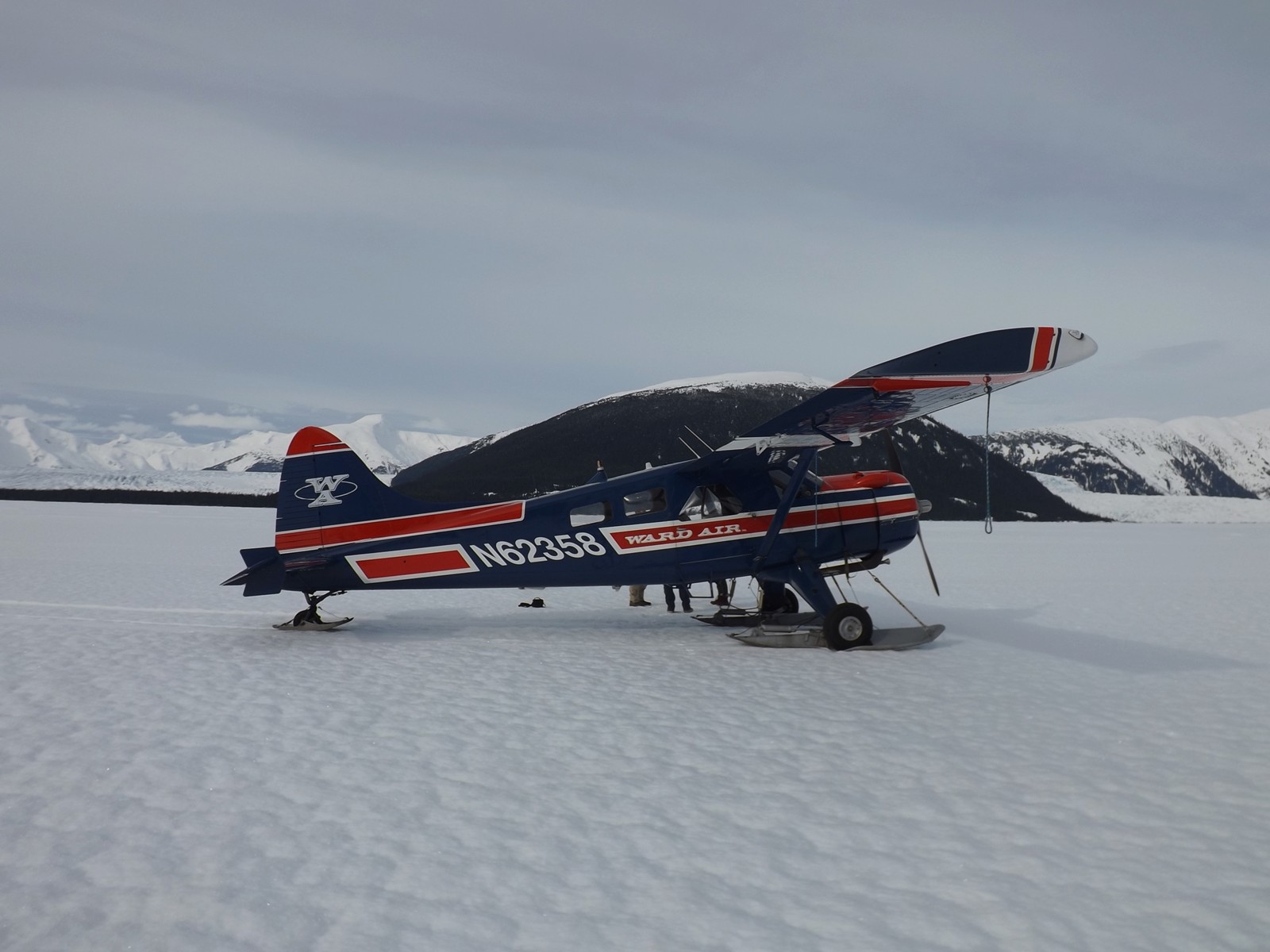
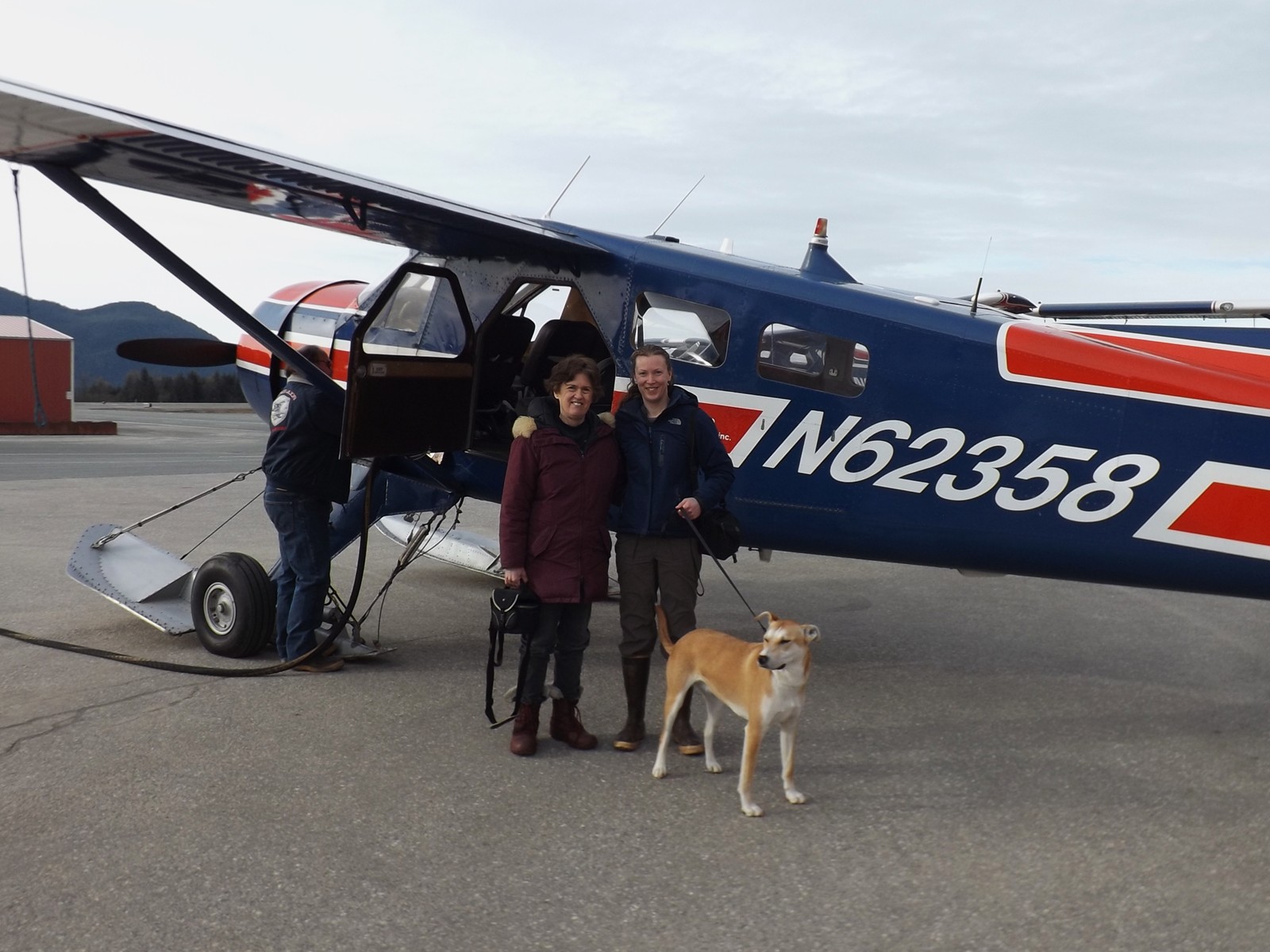 We all agreed it was a
ridiculously
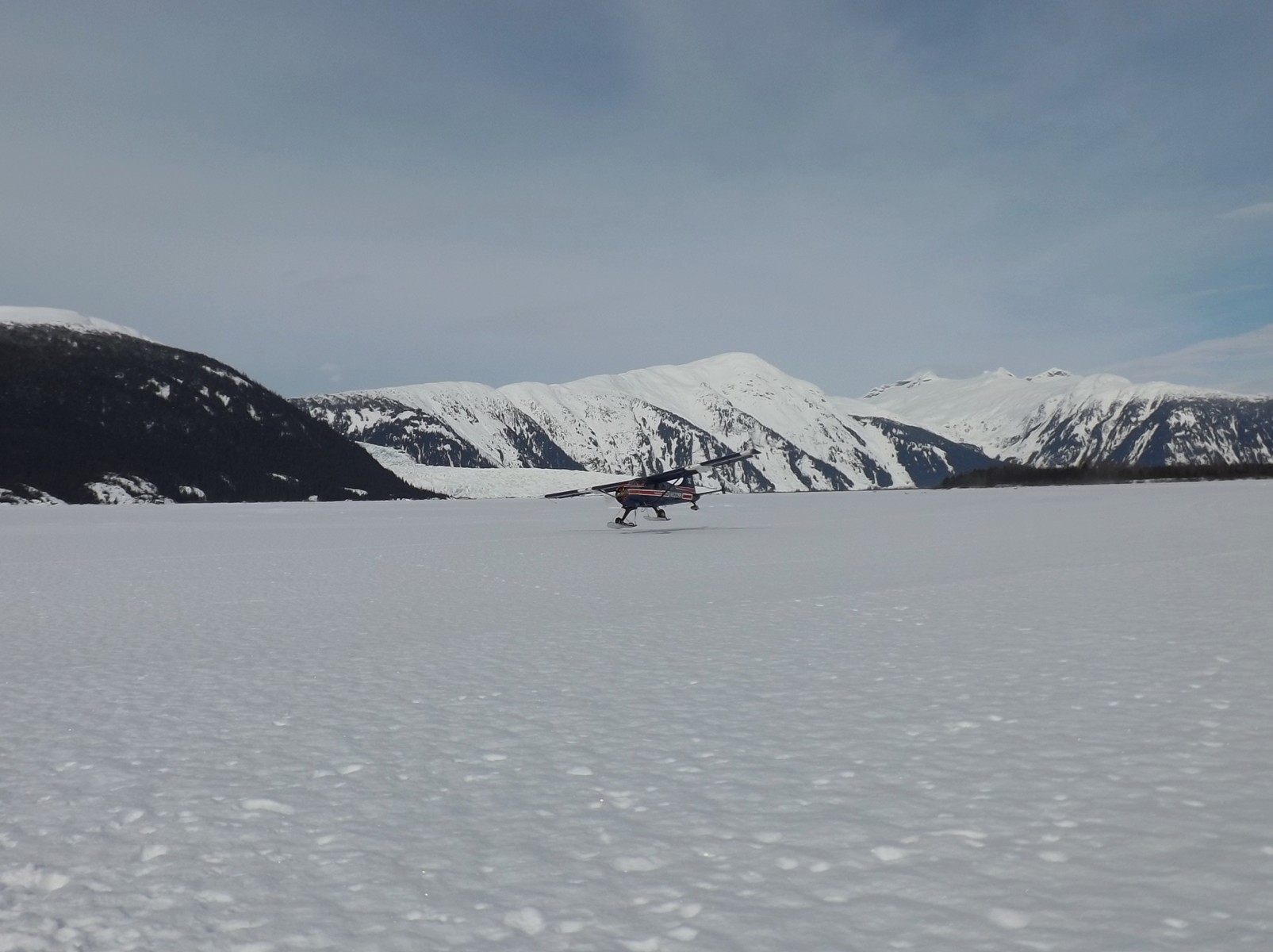
uneventful landing. The Ward Air beaver on skis made one pass
over the
cabin, turned above the meadow, and descended onto the river, touching
down
just below the edge of the marshy slough upriver from the cabin.
It
was
such a soft touchdown I had to squint to confirm that we were on the
snow at
all. The beaver slid past the cabin and continued down the river
and was
well on its way to the big slough before Ed turned the plane, gunned it
a bit
to get over a lump under the ice, and taxied to the front of the
cabin.
The day was glorious, calm and mostly sunny; we all clambered out,
including
Ed, and chatted for some time on the river. Chris and Torsten
romped with
an ecstatic Cailey, surrounded by endless plains of hard packed
snow.
Eventually, the two of them climbed back into the beaver with the pilot
and took off
for
Juneau, leaving my mother and me standing on the ice with Cailey in the
middle
of the Taku River.
We all agreed it was a
ridiculously
uneventful landing. The Ward Air beaver on skis made one pass
over the
cabin, turned above the meadow, and descended onto the river, touching
down
just below the edge of the marshy slough upriver from the cabin.
It
was
such a soft touchdown I had to squint to confirm that we were on the
snow at
all. The beaver slid past the cabin and continued down the river
and was
well on its way to the big slough before Ed turned the plane, gunned it
a bit
to get over a lump under the ice, and taxied to the front of the
cabin.
The day was glorious, calm and mostly sunny; we all clambered out,
including
Ed, and chatted for some time on the river. Chris and Torsten
romped with
an ecstatic Cailey, surrounded by endless plains of hard packed
snow.
Eventually, the two of them climbed back into the beaver with the pilot
and took off
for
Juneau, leaving my mother and me standing on the ice with Cailey in the
middle
of the Taku River.
I t was our third attempt
at the trip,
having been foiled twice in February, once by warm and stormy
conditions and
the other time with similar conditions and scheduling conflicts.
This time
we'd
scheduled the flight following nearly a week of cold, clear weather
that
improved landing conditions on the river and lingered unexpectedly into
Friday
for our flight. The weather forecast called for rain and snow,
but we
stood in the sunshine watching the ice crystals on the river
glint without
a hint of any impending southeasterly. My mother and loaded a
sled with
our gear and hauled everything up the steep bank of the river onto
the
packed snow above and to the cabin door beyond. Given the moist
winter,
there was
less snow than I expected--about five feet in most places--and we were
able to
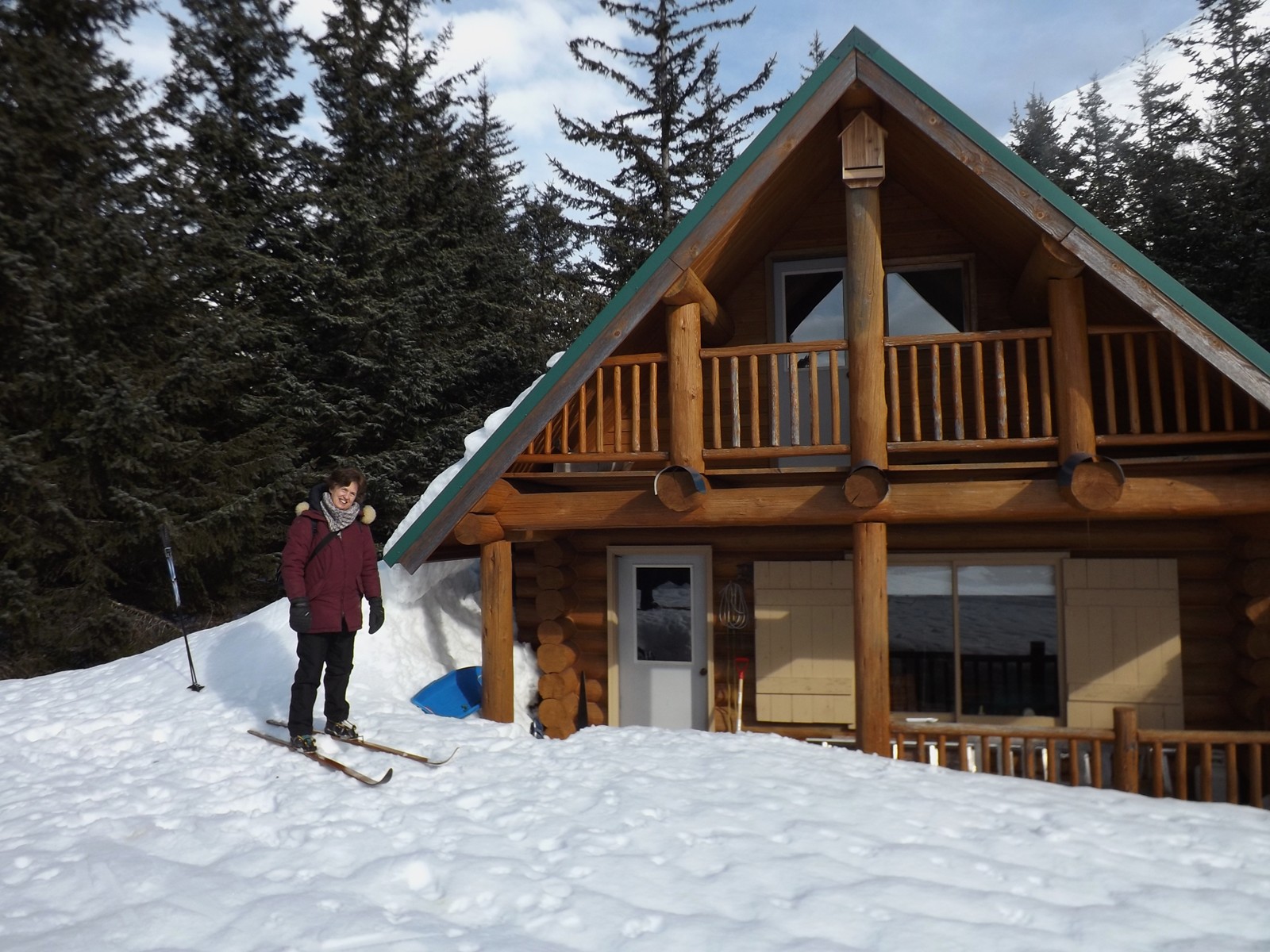
slide onto the porch with ease. Finding the key was a little
trickier,
but before we knew it the doors were open and the shutters over the
picture
window were letting in a surprising amount of light (we were grateful
for that,
as the other shutters were helplessly frozen in snow beneath the
eves). We found
the cabin
in perfect condition and set to work settling in. I took the
shovel my
mother brought and started digging out the propane tank, tucked in the
corner
of the logs by the edge of the back porch and under all the snow that
had
sloughed off the roof. The snow was hard packed and crystallized,
but
came out easily enough with a little work (I'd soon stripped off most
of my
layers). Close to the ground it finally occurred to me that I'd
seen two
propane tanks on the front porch and my mother confirmed that they'd
actually
disconnected the tank last fall! Most of my work was not in
vain,
though, as I still needed to dig a hole for the tank all the way to
ground
level so the short copper line beneath the porch could reach it.
My mom brought
over the
tank and crawled under the porch to unearth the line and we soon had it
all
connected. In the meantime, she'd also started a fire inside
and climbed
to the chimney on a convenient pinnacle of snow to make sure the bent
cap on
the stack was allowing the stove to draw air (it was).
t was our third attempt
at the trip,
having been foiled twice in February, once by warm and stormy
conditions and
the other time with similar conditions and scheduling conflicts.
This time
we'd
scheduled the flight following nearly a week of cold, clear weather
that
improved landing conditions on the river and lingered unexpectedly into
Friday
for our flight. The weather forecast called for rain and snow,
but we
stood in the sunshine watching the ice crystals on the river
glint without
a hint of any impending southeasterly. My mother and loaded a
sled with
our gear and hauled everything up the steep bank of the river onto
the
packed snow above and to the cabin door beyond. Given the moist
winter,
there was
less snow than I expected--about five feet in most places--and we were
able to
slide onto the porch with ease. Finding the key was a little
trickier,
but before we knew it the doors were open and the shutters over the
picture
window were letting in a surprising amount of light (we were grateful
for that,
as the other shutters were helplessly frozen in snow beneath the
eves). We found
the cabin
in perfect condition and set to work settling in. I took the
shovel my
mother brought and started digging out the propane tank, tucked in the
corner
of the logs by the edge of the back porch and under all the snow that
had
sloughed off the roof. The snow was hard packed and crystallized,
but
came out easily enough with a little work (I'd soon stripped off most
of my
layers). Close to the ground it finally occurred to me that I'd
seen two
propane tanks on the front porch and my mother confirmed that they'd
actually
disconnected the tank last fall! Most of my work was not in
vain,
though, as I still needed to dig a hole for the tank all the way to
ground
level so the short copper line beneath the porch could reach it.
My mom brought
over the
tank and crawled under the porch to unearth the line and we soon had it
all
connected. In the meantime, she'd also started a fire inside
and climbed
to the chimney on a convenient pinnacle of snow to make sure the bent
cap on
the stack was allowing the stove to draw air (it was).
By this time we'd both
worked up an appetite,
so we quickly unpacked as I made quesadillas on the propane range and
drank modelo
especials that my mother brought. The day was still glorious and
we
couldn't believe our good fortune for finally having made it up
there--the
winter trip we'd talked about for so long. At 1:30 we were
suited up
on our skis and headed to the river. We were both unnecessarily
bundled
up and started shedding layers almost as soon as we were
underway. The
sun and the exercise warmed us and my mother left her scarf and
sweatshirt
behind on the snow. I tied my winter coat and fleece around my
waist and skied
in long underwear for some time. The day
was absolutely glorious,
the sun
casting beams of dramatic light over the Taku Glacier when it wasn't
illuminating the wide expanse of smooth snow around us. There
were no
obvious open leads, and few logs showed their heads above the snow and
ice, so
the river was a vast expanse of smooth, hard snow crystals--perfect
cross-country ski substrate. As we approached the marshy area
upriver, I
cut off and cruised to the main river bank to explore some tracks I'd
seen from
the air which turned out to be, not surprisingly, moose. Though
the
prints were poorly formed at best, the moose had post-holed what must
have been
four feet down in some places and there's no other animal that can do
that! There was also an old pile of scat to confirm
identification. I saw quite a few
moose tracks
there on the riverbank, at least one set of which headed out into the
middle of
the river. I heard, but did not see, ravens.

 We continued north up the
riverbank,
noting a wet area where the slough emerged and a chunk of muddy
riverbank
exposed
between snow layers. We soon passed the marsh and skied along the
forested riverbank. Everything was beautiful and intriguing and I
annoyed
myself with how many photos I wanted to take. Not far up, we
passed the
mouth of a slough emerging from the forest, likely the one crossed by
the
Bradley-Ogden Bridge on the road from the lodge. About 20 feet of
slough
ice was exposed, but banks of snow rose from it where it met the river
that
were trampled by myriad tracks in a wide arc. The top of the snow
mounds
to either side of the confluence were adorned with many piles of
closely spaced
scat. I didn't know it at the time, but river otter scat piles
are known
as spraints and otters make "spraint stations" to mark their
territory.
Whatever otter owned this slough had been busy! It was a
fascinating find
and we imagined the otter sliding under the ice as he cruised his
slough--there
was one small patch of open water in the ice.
We continued north up the
riverbank,
noting a wet area where the slough emerged and a chunk of muddy
riverbank
exposed
between snow layers. We soon passed the marsh and skied along the
forested riverbank. Everything was beautiful and intriguing and I
annoyed
myself with how many photos I wanted to take. Not far up, we
passed the
mouth of a slough emerging from the forest, likely the one crossed by
the
Bradley-Ogden Bridge on the road from the lodge. About 20 feet of
slough
ice was exposed, but banks of snow rose from it where it met the river
that
were trampled by myriad tracks in a wide arc. The top of the snow
mounds
to either side of the confluence were adorned with many piles of
closely spaced
scat. I didn't know it at the time, but river otter scat piles
are known
as spraints and otters make "spraint stations" to mark their
territory.
Whatever otter owned this slough had been busy! It was a
fascinating find
and we imagined the otter sliding under the ice as he cruised his
slough--there
was one small patch of open water in the ice.
Somewhat shy of Timber
Point we came
across more tracks in the snow emerging from the woods and heading
along the
riverbank; though the tracks weren't fresh and were somewhat degraded,
we
guessed wolf based on the shape and gait and we confirmed that farther
on where
he or she had left clear canine prints in the snow. A second set
of
tracks crossed the other at a right angle (also emerging from the
woods) and headed straight across the
river. A third set emerged from the forest farther on and joined
the first
in his
or her trot upriver, stepping closely in the other's tracks. Unfortunately,
our tracking was cut short by an open lead that trapped us between the
forest
and the rest of the river (see photo to left). The wolves had jumped the three or
four foot
opening with apparent ease, but we had to backtrack until a collapsed
snow
bridge gave us passage. The water was perfectly clear, which was
interesting, and only a couple of inches deep, so there was no danger
to using
the bridge. From there we headed across the river toward the
northern
corner of Hole-in-the-Wall Glacier; I was pleased to find that skiing
across
the nearly featureless landscape was much more enjoyable than I'd
imagined! I stopped along the way and sat on a conveniently
curved root
sticking up from a sandbar and enjoyed the view before we finished the
ski to
the opposite shore. Our goal was Sockeye Creek, but it turned out
to be
surprisingly difficult to find. The river in that area weaves
around
several willowed islands and it was not at all obvious where the creek
actually
began. We think we found it, but it was in itself
anti-climactic.
More fun was skiing through the willows that thrive in the  sandy soil
between
the river and the glacier. My mom spotted a tall willow crowned
in white
from a distance and correctly guess they were pussy willows, most still
with a
protective cap clinging to them. From there we could see that a
handful
of other willows were similarly adorned, perhaps 5% of
them. And
between the stands of willow there were many more moose and wolf tracks.
sandy soil
between
the river and the glacier. My mom spotted a tall willow crowned
in white
from a distance and correctly guess they were pussy willows, most still
with a
protective cap clinging to them. From there we could see that a
handful
of other willows were similarly adorned, perhaps 5% of
them. And
between the stands of willow there were many more moose and wolf tracks.
After crossing what we
believed was
Sockeye Creek, we skied into a dense grove of cottonwoods, sent a quick
"okay" message home from Spot, and reluctantly headed back downriver
(we'd already been underway three hours and knew that darkness was
coming). Given more time, we would have happily skied up Sockeye
Creek
and continued exploring that side of the river. Instead, we
headed along
the toe of Hole-in-the-Wall Glacier, the deep blue of the ice vibrant
against
the austere white landscape. We'd long lost the sun behind high
cloud and
had redonned some clothing, but the sky was still mostly clear upriver
and we
could see bare, ragged peaks exposed to the sky and glowing with the
yellow
light of winter sun. It was achingly beautiful.
And so we passed the
glacier and headed
at an angle for the cabin across and downriver. This time the
crossing
was a
little more monotonous, but I entertained myself in the end by
searching first
for our earlier tracks and then for my mother's discarded clothing,
both of
which proved somewhat difficult to find in the twilight. We
reached the
cabin at
about 6:45, tired from five hours of nearly continuous skiing, but
delighted
with the the trip so far. We ate salmon pasta, salad, and
marionberry pie for
dinner and wet to bed early.
Photos
enlarge!
 Chris and Torsten at the airport in Juneau |
 Cailey snuggles in the beaver |
 Taku Glacier cut by Norris Creek |
 Hut Point across from Taku Glacier--the edge of the ice (Mom's photo) |
 Looking upriver from the toe of Taku Glacier |
 The meadows behind the cabin (Mom's photo) |
 Cottonwood grove behind the cabin |
 Landed on the river (Mom's photo) |
 Looking across the river |
 Chris and Torsten romping with Cailey |
 Mom and I |
 Taking off (Hole-in-the-Wall Glacier beyond) |
 Snow steps from the porch |
 Mom in front of the cabin |
 View from the cabin as we head out to ski |
 Heading out at the edge of the river (Mom's photo) |
 Where we're headed upriver |
 Ski plane tracks on the river |
 Moose tracks head across the river |
 Slough and otter tracks |
 Spraints (otter scat) |
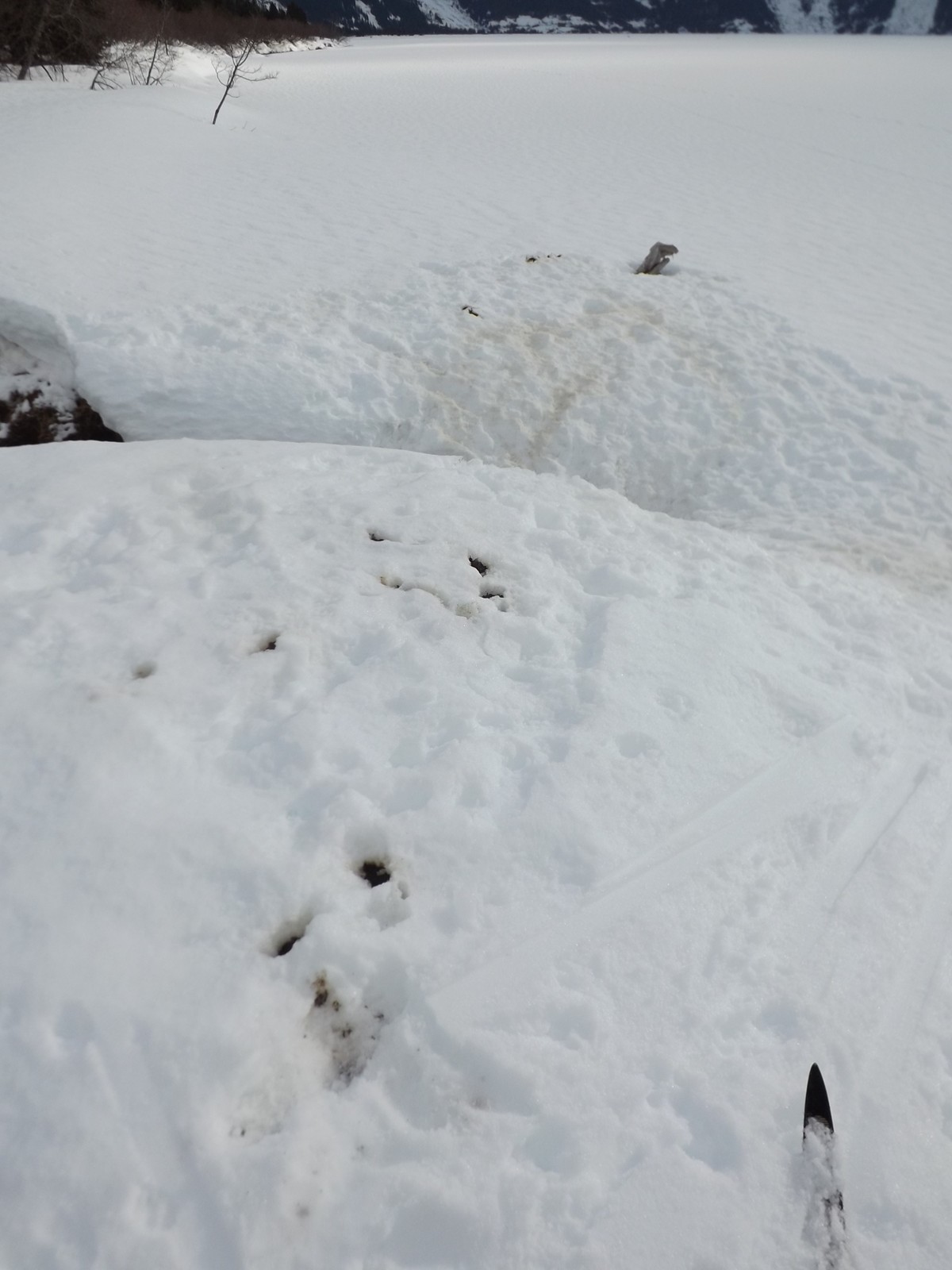 Otter spraint stations |
 Heading upriver (Mom's photo) |
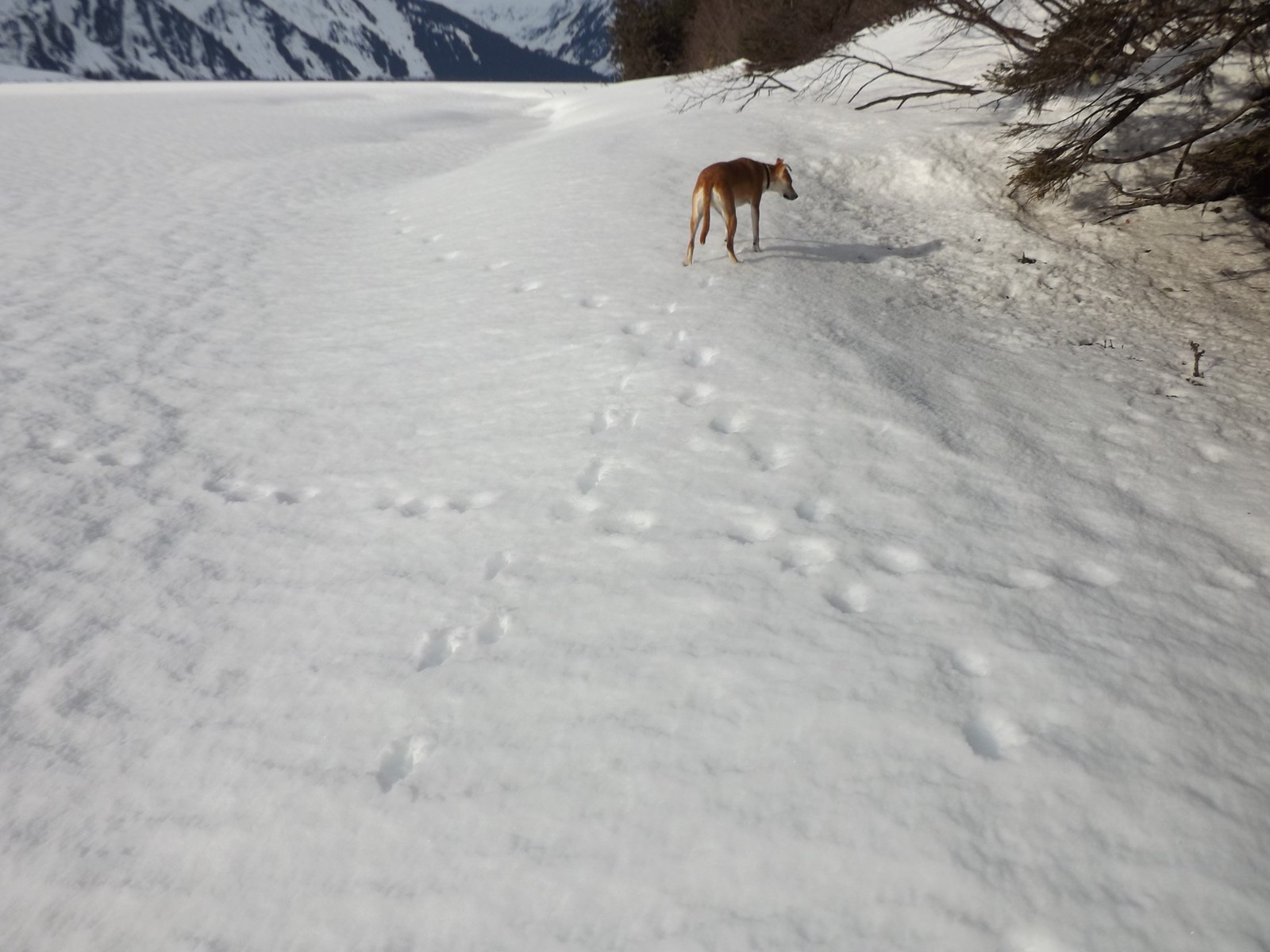 Wolf, wolverine, and dog tracks |
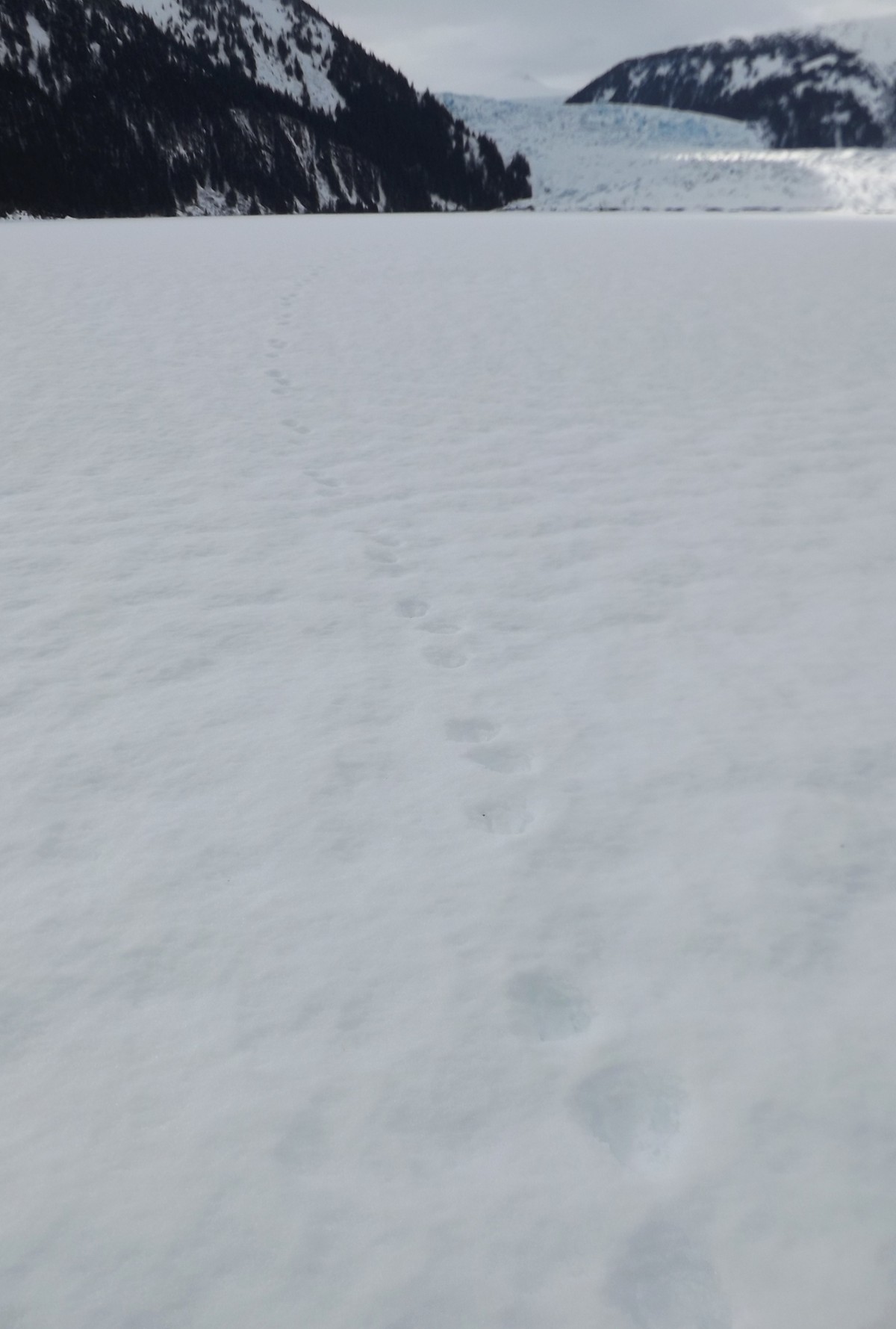 Wolverine tracks cross the river |
 Wolf tracks |
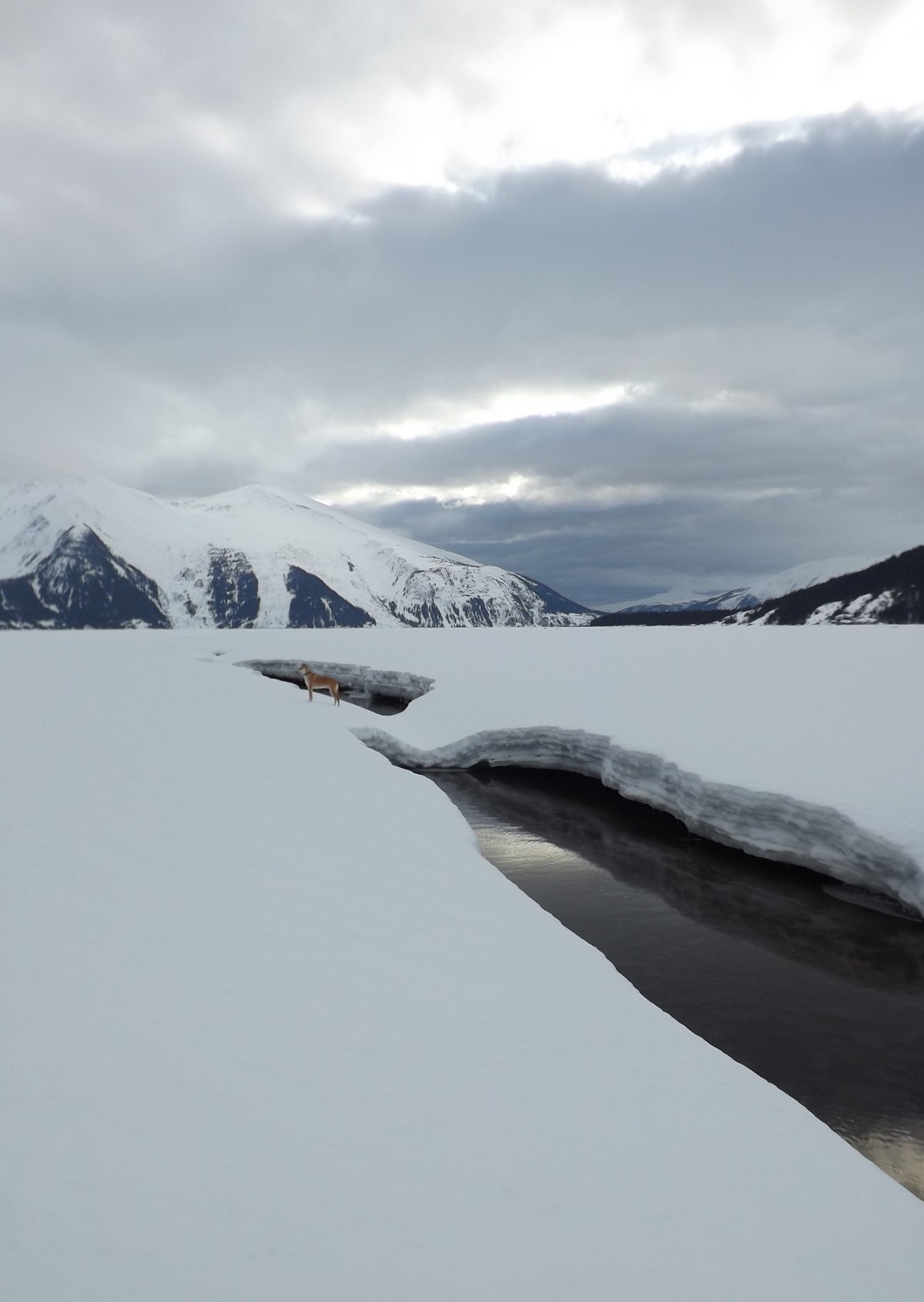 Snow bridge |
 Mountains behind the cabin |
 Mom crossing the river |
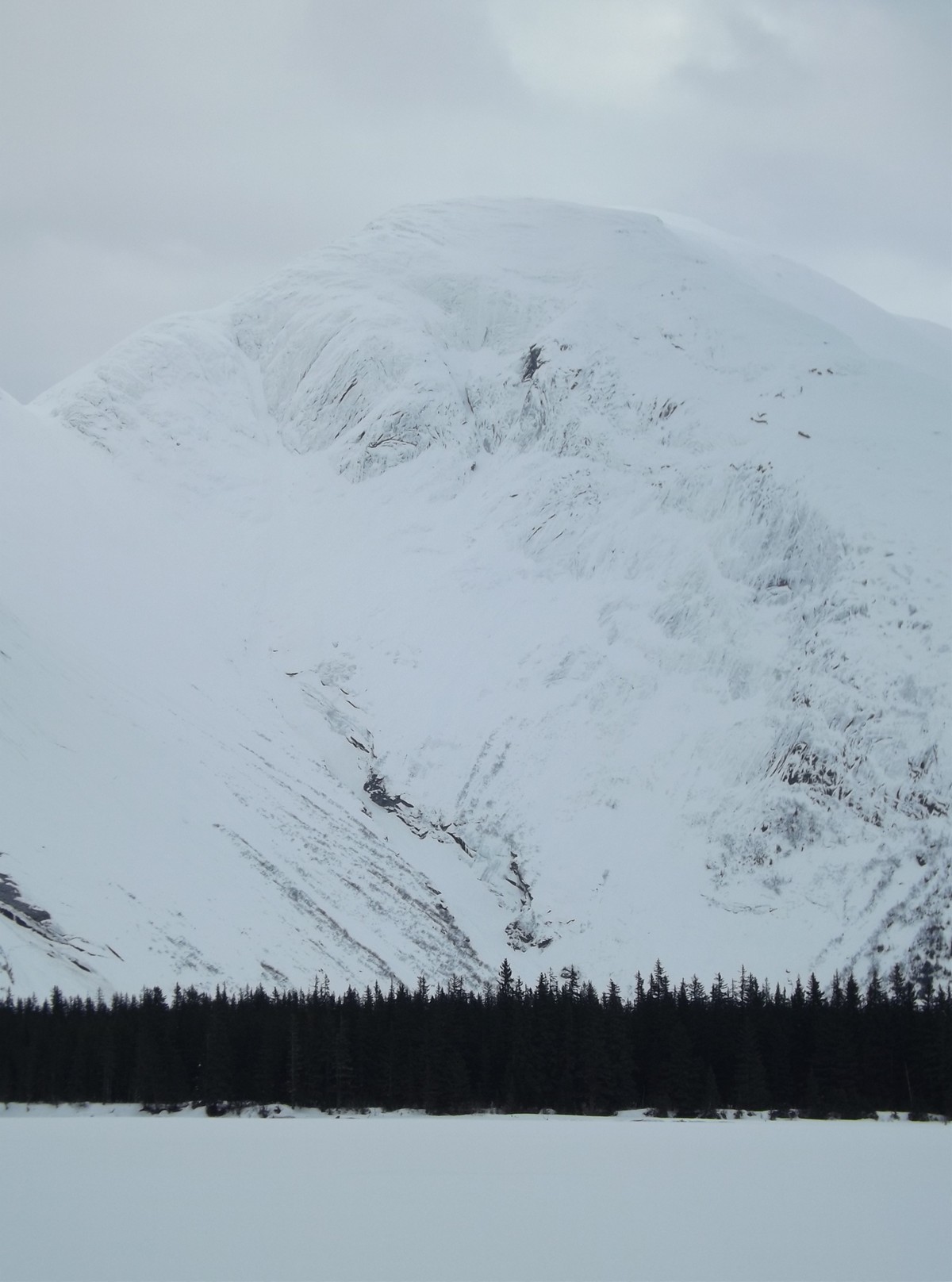 Snowy mountain |
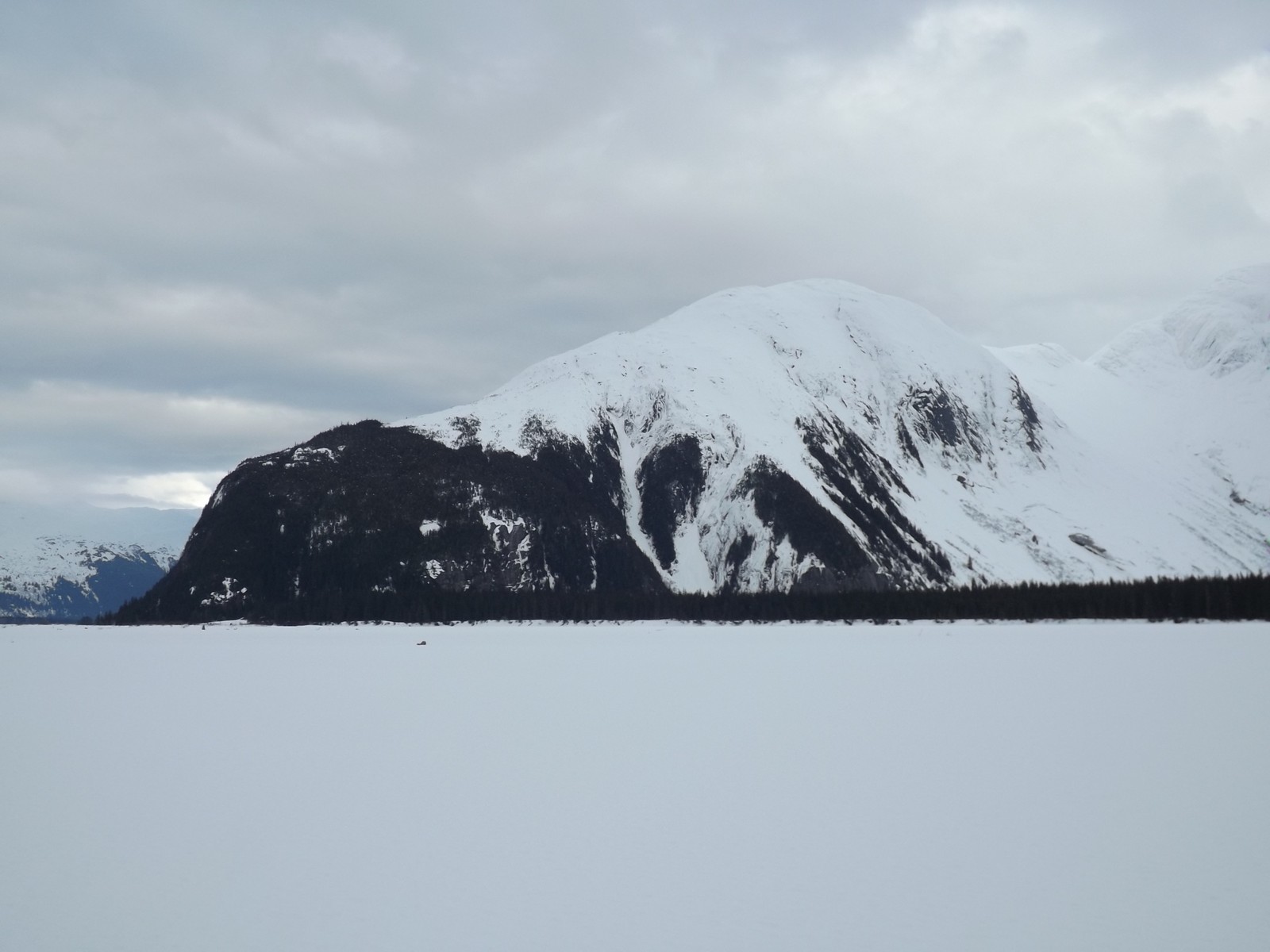 Lkoodaseits'k (Giant Mountain) |
 Hole-in-the-Wall Glacier |
 Resting on the river (Mom's photo) |
 Pussy willows |
 Looking upriver from Sockeye Creek (Mom's photo) |
 Looking upriver (Mom's photo) |
 Mom and Cailey in front of Hole-in-the-Wall |
 Hole-in-the-Wall Glacier |
 Log on a sandbar |
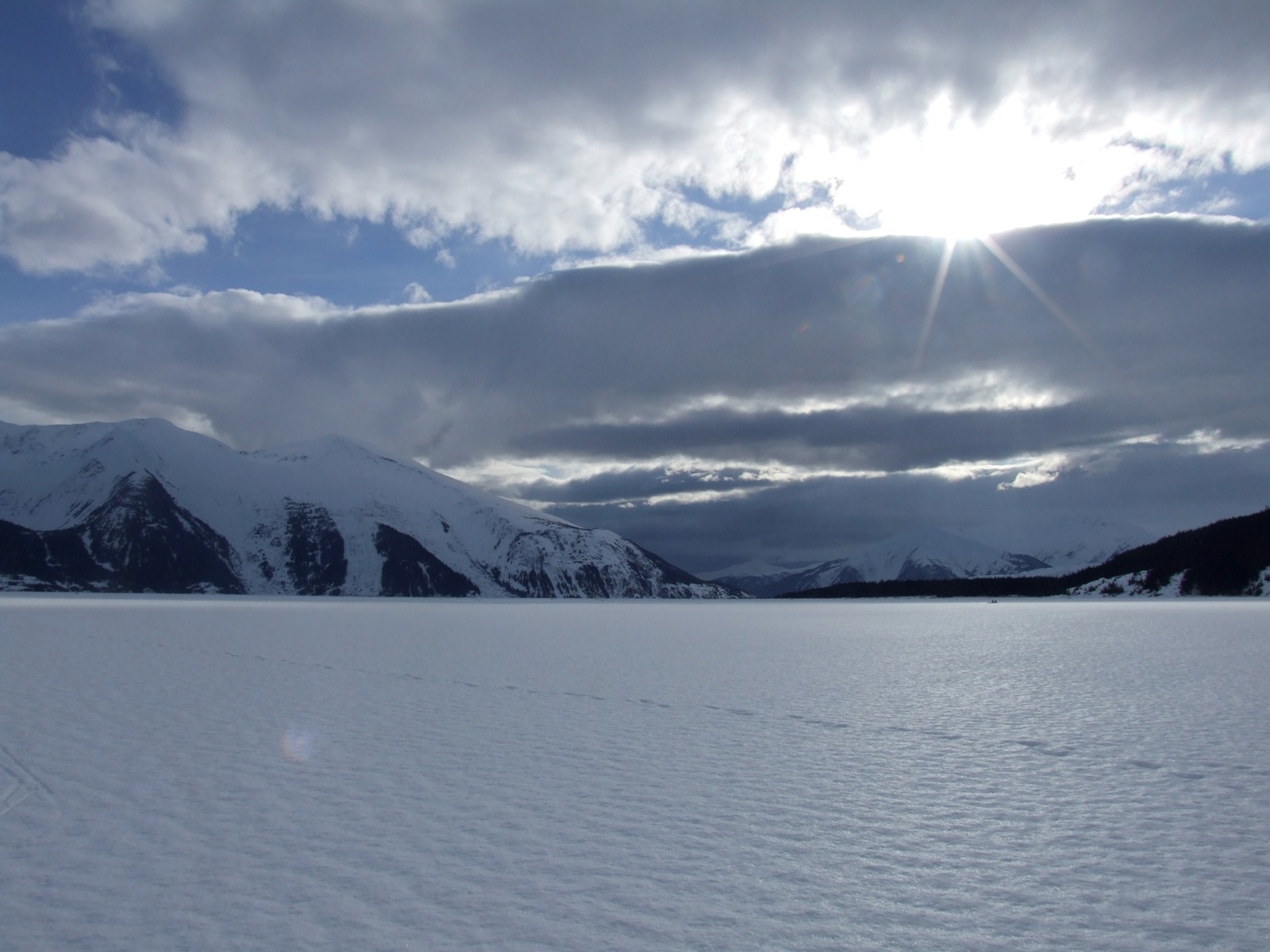
Looking downriver (moose tracks?)